
Pregnancy brings remarkable changes to the body, and staying active can play a key role in supporting both physical comfort and overall well-being. As posture shifts, joints become more flexible, and energy levels fluctuate, movement needs to be adapted thoughtfully rather than avoided.
Prenatal fitness focuses on maintaining strength, mobility, and circulation in ways that respect these changes. When paired with chiropractic care, it can also help support spinal function, reduce common aches, and promote better balance as the body adjusts throughout pregnancy.
Each trimester comes with its own physical demands and considerations. Exercises that feel supportive early on may need to be modified later, while professional guidance can help ensure movements remain safe and effective at every stage.
With the right approach, prenatal exercise and chiropractic care can work together to help expectant mothers move with greater confidence, comfort, and reassurance from the first trimester through to the final weeks.
Prenatal fitness: Staying strong
The goal of prenatal exercise isn’t to set personal records; it’s about functional longevity and preparing for the marathon of labour.
- Core and pelvic floor: Focus on the “deep core” (transverse abdominis) to support your growing bump and reduce the risk of diastasis recti.
- Cardiovascular health: Moderate intensity (walking, swimming, stationary cycling) improves circulation and can help manage gestational blood sugar levels.
- Strength training: Focusing on the posterior chain (glutes, hamstrings, and back) helps counteract the forward pull of the belly, protecting your lower back.
Chiropractic care: Finding balance
As your pregnancy progresses, the hormone relaxin loosens your ligaments. While this is great for birth, it can make your joints feel “sloppy” or unstable.
The Webster technique
Many prenatal chiropractors are certified in the Webster technique. This is a specific adjustment that focuses on the pelvis and sacrum.
- The goal: To reduce nervous system stress and balance pelvic muscles and ligaments.
- The benefit: A balanced pelvis gives the baby the maximum amount of room to settle into the best possible position for birth.
Common prenatal issues addressed with chiropractic care
- Sciatica: Sharp pains shooting down the leg.
- Round ligament pain: That “stabbing” feeling in the lower abdomen when you sneeze or move quickly.
- Symphysis pubis dysfunction (SPD): Pain at the front of the pelvic bone.
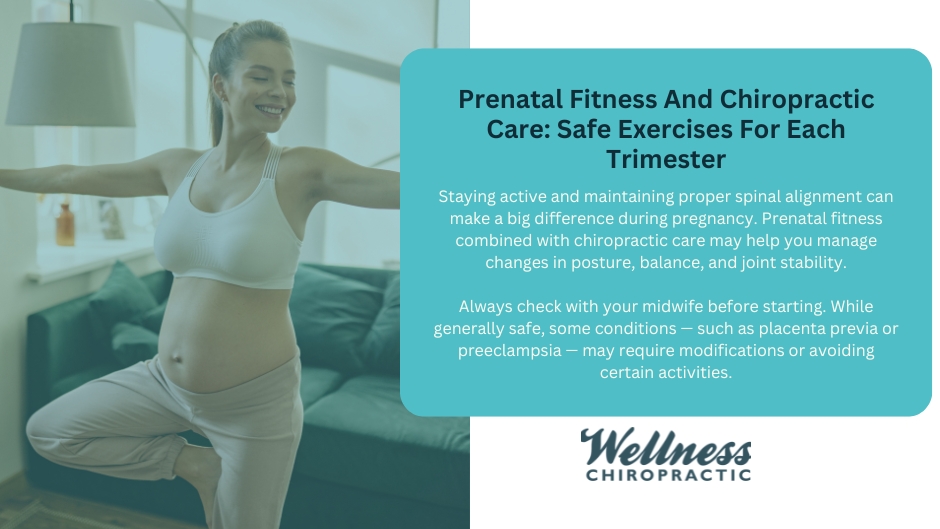
The golden rules of prenatal movement
Before diving in, keep these safety pillars in mind:
- Listen to your body: If it hurts, pinches, or feels “off”, stop.
- Avoid the Valsalva manoeuvre: Don’t hold your breath during exertion; keep the oxygen flowing to you and the baby.
- Watch the heat: Avoid overheating or over-stretching (your ligaments are already extra stretchy right now).
- Stop exercising and call your health care practitioner if you experience:
- Dizziness or feeling faint.
- Calf pain or swelling.
- Fluid leaking or vaginal bleeding.
- Shortness of breath before starting exercise.
First trimester: Building a foundation
You might be dealing with fatigue or morning sickness right now, so the goal is consistency over intensity.
- Walking: The gold standard. It’s low impact and easy to fit in.
- Prenatal yoga: Great for flexibility and starting those breathing techniques you’ll want later.
- Swimming: Perfect if you’re feeling overheated or nauseous, as the water supports your weight.
- Strength training: Light weights are fine, but avoid heavy lifting that causes you to strain or hold your breath.
Second trimester: The “honeymoon” phase
Energy often returns here, but your centre of gravity is shifting.
- Indoor cycling: A stationary bike is safer than a road bike now to avoid falls as your balance changes.
- Pelvic floor exercises: Start focusing on these to support your growing uterus and bladder.
- Modified Pilates: Focus on core stability, but avoid lying flat on your back for long periods, as it can compress a major vein (the vena cava).
- Water aerobics: Relieves pressure on your joints as your “bump” grows.
Third trimester: Staying mobile
You’re likely feeling the weight now. Focus on preparation and discomfort relief.
- Prenatal stretching: Focus on opening the hips and relieving lower back tension.
- Walking (short bursts): Keep moving, the fresh air and sunshine is good for your physical and emotional health.
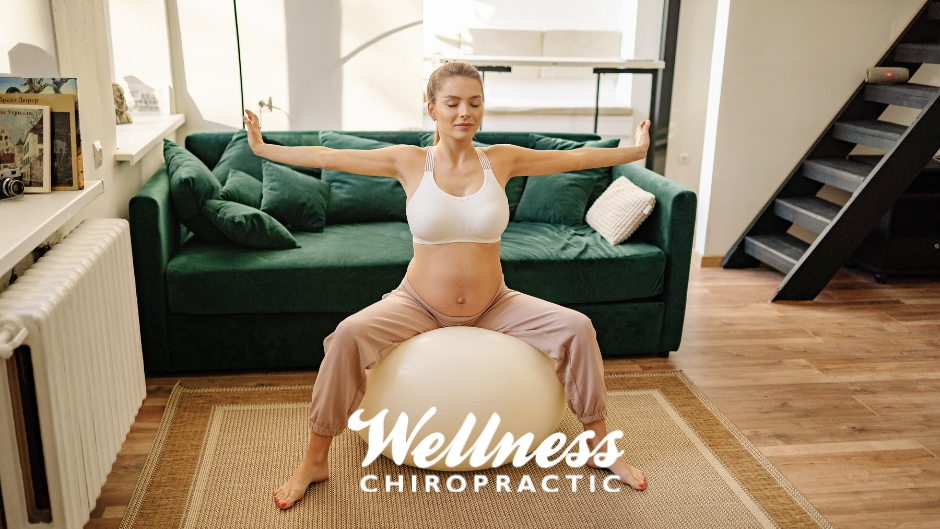
- Birthing ball exercises: Sitting on an exercise ball can help with optimal fetal positioning and pelvic comfort.
- Low-impact aerobics: Keep your heart rate up, but avoid jumping or “bouncy” movements.
Final thoughts
Maintaining an active lifestyle and proper spinal function can make a world of difference in feeling your bestr during pregnancy and preparing for labour.
Combining prenatal fitness with chiropractic care helps manage the shifting centre of gravity and the hormonal changes that loosen your joints.
If you have been very physically active prior to becoming pregnant, you can usually continue on your exercise routine with only slight modifications. If you are new to being active, listen to your body and seek advice from your health care practitioner. While both exercise and chiropractic care are very safe during pregnancy, certain conditions (like placenta previa or preeclampsia) may require you to hit the pause button.
Book an appointment at Wellness Chiropractic for your personalised chiropractic care and treatment plan!