
Every athlete knows the frustration of doing everything right—training hard, eating well, resting—yet still feeling tight, sore, or one step behind peak form. Those lingering aches after a workout, the stiffness that refuses to fade, and the sense that the body is not responding as quickly as it should are signals that recovery needs more than just time off.
Peak performance is built during recovery, not during training. When muscles, joints, and the nervous system fail to reset efficiently, progress slows, and injury risk rises. Many athletes push through discomfort, assuming it is part of the process, until reduced mobility or chronic pain forces them to stop altogether. That moment often arrives sooner than expected.
Chiropractic care has become an advantage among athletes who want their bodies to function at the highest level consistently. By improving joint mechanics, enhancing nervous system communication, and restoring optimal movement patterns, recovery becomes faster, deeper, and more reliable.
How to leverage chiropractic care for peak athletic performance and faster recovery
Maximising recovery is about more than just resting; it’s about ensuring your body’s command centre, the nervous system, is communicating perfectly with your muscles.
1. Optimise neuro-communication
The primary goal of a chiropractic adjustment is to remove subluxations (dysfunction) in the spine.
- The benefit: When your spine is balanced, nerve signals flow appropriately. This leads to quicker reaction times, better balance, and more precise muscle activation.
- The result: You aren’t just fixing a back problem, you’re fine-tuning your body’s internal wiring for high-intensity movement.
2. Speed up recovery with soft tissue techniques
Modern sports chiropractors do much more than just “crack” backs. They use specialised soft tissue therapies to address the wear and tear of training.
- Active release technique (ART): Combines movement with deep pressure to break up scar tissue and adhesions that limit your range of motion.
- Graston technique / IASTM: Uses stainless steel tools to “scan” and treat areas of chronic inflammation or muscle knots.
- Myofascial release: Targets the fascia (the “shrink wrap” around your muscles) to reduce stiffness and improve blood flow, which flushes out lactic acid.
3. Injury prevention: The proactive shift
Most athletes wait until they are injured to see a chiropractor. However, peak performers use it preventatively.
- Biomechanical screening: A chiropractor can identify “silent” imbalances—like one hip sitting higher than the other—before they lead to a pulled hamstring or a stress fracture.
- Reduced compensatory strain: When one joint is stiff, another joint overworks to compensate. Adjustments ensure every joint carries its fair share of the load.
4. Manage systemic inflammation
Chiropractic care has been shown to lower the production of pro-inflammatory cytokines, which are the chemicals that make you feel “achy” after a hard session.
- Pair your adjustments with nutritional counselling. Many chiropractors recommend anti-inflammatory protocols (like Omega-3 loading or magnesium supplementation) to support the structural work they do on the table.
5. Specific recovery modalities
In addition to manual adjustments, many sports clinics offer advanced tools to accelerate healing:
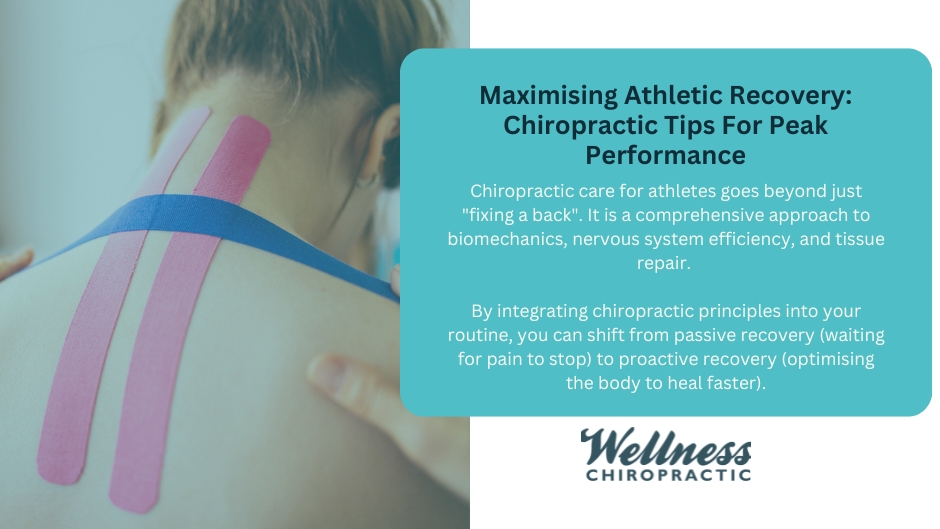
- Kinesiology taping: Provides structural support to joints without restricting movement and helps drain swelling.
- Cold laser therapy: Uses specific wavelengths of light to stimulate cellular repair and reduce inflammation deep within the tissue.
- Functional exercises: Tailored movements to strengthen weak links identified during your adjustment.
6. Master your biomechanics
How you move is just as important as how much you move. Many chiropractors provide gait analysis or ergonomic assessments to identify “leaks” in your energy.
- Posture correction: Good posture isn’t just for standing; it’s for moving. Proper alignment reduces the “energy cost” of movement, meaning you can go harder for longer without burning out.
- Balance and proprioception: Chiropractic care enhances your body’s internal “GPS” (proprioception), helping you stay upright and agile during complex movements or on uneven terrain.
7. Restore and expand range of motion
Joint restrictions often lead to “compensatory movements”—where one part of your body overworks to make up for a stiff joint elsewhere. This is a primary cause of fatigue and injury.
- Target areas: Focus on the hips, ankles, and thoracic spine (mid-back). These are common “bottlenecks” for athletes.
- Chiropractic advantage: Adjustments restore fluid motion to locked joints, allowing for a deeper squat, a more powerful golf swing, or a longer running stride.

Final thoughts
Chiropractic care for athletes goes beyond just “fixing a back”. It is a comprehensive approach to biomechanics, nervous system efficiency, and tissue repair.
By integrating chiropractic principles into your routine, you can shift from passive recovery (waiting for pain to stop) to proactive recovery (optimising the body to heal faster).
Optimising the relationship between the spine and the nervous system can increase power, agility, and mental clarity.
For those serious about longevity, resilience, and competitive edge, understanding how chiropractic strategies support athletic recovery can be the difference between plateauing and performing at full potential.
Book an appointment at Wellness Chiropractic for your personalised chiropractic care and treatment plan!